
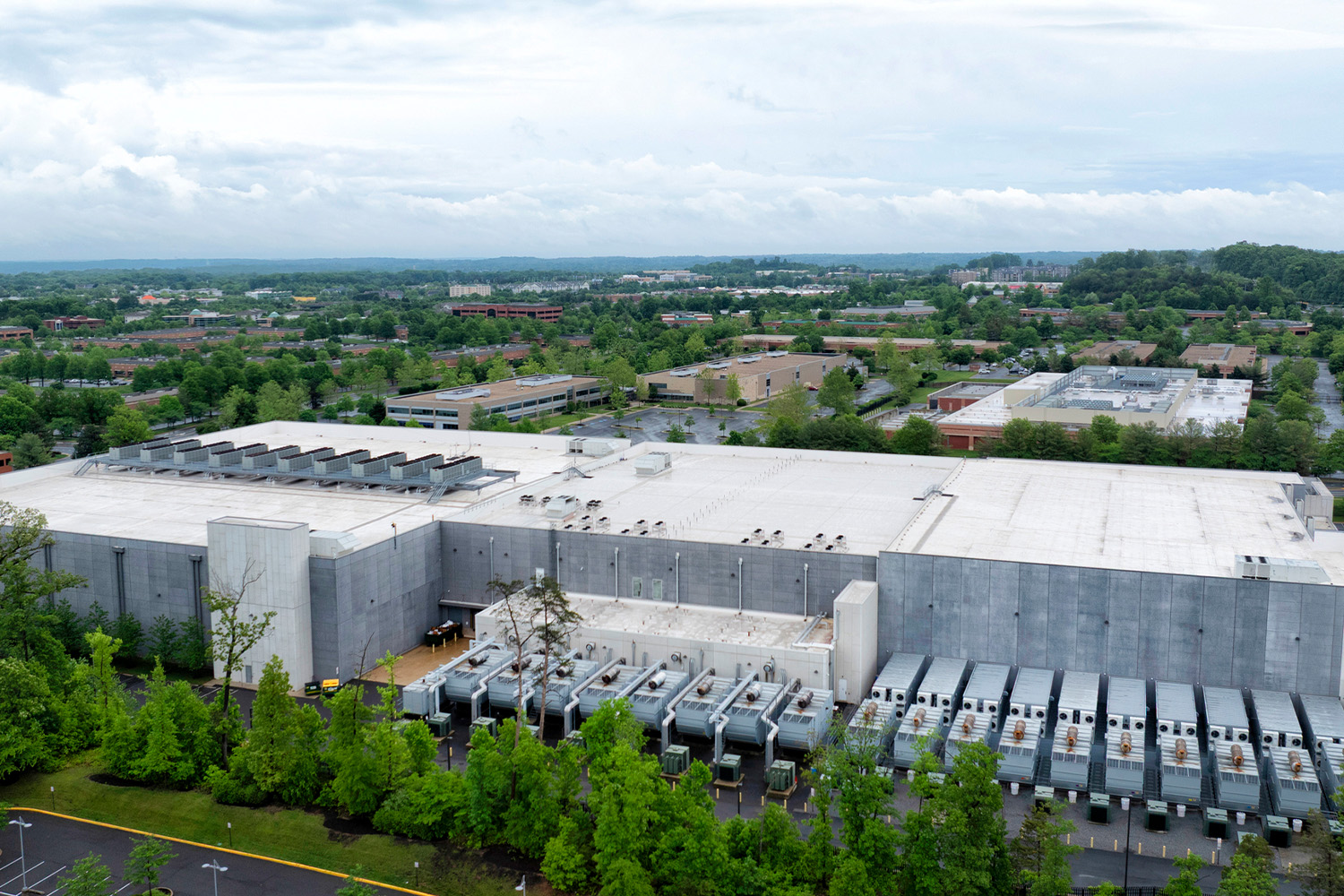
Baton Rouge sits at the intersection of Louisiana's energy corridor and the Southeast's growing technology infrastructure, creating a data center market defined by industrial enterprise computing rather than consumer cloud scale. The Exxon Mobil refinery complex, the numerous petrochemical plants along the River Road corridor, and Louisiana State University's research computing infrastructure collectively represent a substantial base of private and institutional data center investment in the metro area. Turner Industries, Shaw Group (now part of CB&I), and other major engineering firms with Baton Rouge headquarters maintain enterprise computing environments that require the same mission-critical roofing approach as colocation facilities, even when they're purpose-built for a single corporate occupant.
Roofing a data center in Baton Rouge requires a specific understanding of the Gulf Coast's weather risk profile. Hurricane season runs June through November, and while Baton Rouge is inland enough that it rarely takes a direct hurricane hit at full intensity, it regularly experiences tropical storm force winds and flooding rainfall from systems making landfall anywhere on the Louisiana or Texas Gulf Coast. Tropical Storm Harvey's flooding in 2017 and Hurricane Ida's 2021 track through Baton Rouge (as a weakened but still destructive system) demonstrated that inland Louisiana data centers need wind and water resistance specifications that go beyond the basic commercial building standard. Data center operators who upgraded their roofing systems after Ida reported significantly less water intrusion damage than facilities with older or under-specified systems.
Wind resistance for Baton Rouge data center roofs must be specified for ASCE 7 hurricane-zone requirements. The design wind speed in the Baton Rouge area (ASCE 7 ultimate) requires FM Global 1-90 or higher uplift classification for most data center applications, with higher classifications at roof perimeter and corner zones. Mechanically attached TPO systems designed for Mid-Atlantic or Midwest markets are generally under-specified for Baton Rouge — the attachment densities must be increased for corner and perimeter zones, and the membrane itself should be tested to the wind uplift pressures derived from the specific building geometry and exposure category. Fully adhered systems, which eliminate point-load concentration at mechanical fasteners under high uplift conditions, are increasingly preferred for large Baton Rouge data center footprints.
CRAC unit penetration management in Baton Rouge data centers faces a challenge that is unique to Gulf Coast climates: condensation management in the context of the region's extreme outdoor humidity. When outdoor air at 90°F and 80 percent relative humidity is drawn through a CRAC unit and chilled to data center operating temperature, the moisture that drops out of the air stream must be managed and drained. If CRAC condensate drain lines run through roof penetrations and those penetrations are not properly detailed, the condensate drainage path can create a moisture infiltration vector independent of precipitation. All condensate drain lines in Baton Rouge data center roofing should be sleeved through dedicated flashings, not shared with refrigerant or other service penetrations.
Baton Rouge's proximity to the petrochemical industry creates a specific consideration for roofing near facilities with fuel and chemical storage. The data centers supporting refinery and chemical plant operations along the River Road often share campus space with fuel storage, chemical processing areas, and industrial exhaust points that can expose rooftop materials to chemical vapors not present in typical commercial environments. PVC and KEE (Ketone Ethylene Ester) membranes provide better chemical resistance than standard TPO or EPDM where the exposure risk is documented and specific, while standard TPO remains appropriate for facilities where the industrial chemical exposure is indirect or episodic.
Generator systems at Baton Rouge data centers must be capable of extended runtime that exceeds most markets' planning assumptions, because the Gulf Coast's hurricane-related utility outages can run 7 to 14 days or longer. Data centers in this market that spec fuel storage for 48 or 72 hours are underserving their clients' needs — the reference events in Baton Rouge's risk history require at least 7 days of fuel autonomy for mission-critical facilities. This extended fuel storage requirement often means larger above-ground or underground fuel tanks with multiple fill pipe and vent penetrations through the roof, all of which need to be detailed correctly for both waterproofing and the fuel vapor management that fire code and NFPA 30 require.
Humidity management at the roof assembly level is a consideration in Baton Rouge that doesn't appear in drier climates. The region's average relative humidity exceeds 70 percent year-round, meaning that moisture vapor pressure against roof assembly components is persistent rather than seasonal. Roof insulation that is not covered by a properly installed and maintained membrane develops moisture accumulation faster in Baton Rouge than almost anywhere in the country except coastal Florida. The consequence is not just reduced R-value — the sustained high humidity accelerates the biological degradation of organic insulation materials, making the choice of inorganic insulation (polyiso, XPS, mineral wool) and a properly sealed assembly the correct approach for long-term performance.
Cable routing and conduit penetration details in Baton Rouge data centers should incorporate hurricane-resistant flashings that can withstand wind-driven rain at the angles and velocities produced by Gulf Coast tropical systems. Standard pipe boots and pitch pocket fills may not perform adequately against the sustained 60 to 80 mph wind-driven rain that can accompany a tropical storm. Enhanced flashings with mechanical backup — two-part pitch pocket systems, mechanically secured lead caps, or pre-manufactured seismic-type flexible collars — provide an additional layer of security against the wind-driven infiltration that standard flashings resist under normal conditions but can fail under extended tropical storm exposure.
Post-hurricane roof inspection and damage documentation is a skill set that every roofing contractor serving the Baton Rouge data center market must develop. Insurance adjusters in the Gulf Coast market have sophisticated expectations for storm damage documentation, and data center operators need contractors who can prepare detailed damage reports with thermal imaging, material sampling, and repair cost separation (storm damage vs. pre-existing conditions) that support insurance claims. Contractors who can provide this service reliably after each storm event become valued long-term partners rather than one-time repair vendors.
Questions Owners Ask
How do we spec a Baton Rouge data center roof that will survive a direct tropical storm?
The specification baseline for a Gulf Coast tropical storm-resistant data center roof includes: 80-mil TPO or PVC (not 60-mil) on a fully adhered or enhanced-density mechanical attachment pattern, FM Global 1-105 or 1-120 uplift classification, manufacturer-rated seam heat-welds inspected by the manufacturer's technical representative, all penetration flashings mechanically secured with backup retention, and parapets with counter-flashing that is mechanically anchored at 12-inch intervals. For new construction, a redundant layer of self-adhering modified bitumen under the primary membrane at critical areas — drain sumps, HVAC curbs, parapets — provides emergency waterproofing backup if the primary membrane is breached in a catastrophic event.
What fuel storage capacity should a Baton Rouge data center plan for given hurricane risk?
Based on the reference events in Baton Rouge's recent history — tropical storm Ida in 2021 produced power outages lasting 7 to 14+ days for significant portions of the metro — mission-critical facilities should target a minimum of 7 days of fuel autonomy at full generator load, not the 48-to-72-hour industry standard that is commonly specified in markets without Gulf Coast hurricane exposure. The fuel tank and fill infrastructure required to support this capacity involves significant roof and site penetrations that must be designed for fuel vapor management and waterproofing simultaneously. The NEC and NFPA 30 requirements for fuel vent pipe height and location should be coordinated with the roof design from the beginning of the project.
How does humidity affect the choice of membrane adhesive for a Baton Rouge data center roof?
Baton Rouge's year-round high humidity requires adhesive formulations specifically rated for high-humidity installation conditions. Some bonding adhesives have minimum substrate dry-time requirements that are difficult to meet when relative humidity is consistently above 70 percent — the adhesive can set too slowly and form a weak bond, or moisture trapped between the adhesive and the membrane creates blister initiation sites. Water-based adhesives specifically formulated for high-humidity environments, or hot-air welded attachment systems (for TPO), avoid this problem entirely. Verify adhesive application conditions with the manufacturer before specifying for a Baton Rouge installation.
What's the difference between a standard commercial roof warranty and a hurricane-zone warranty for a data center?
Standard manufacturer warranties don't always include wind-event coverage above 55 or 72 mph wind speeds, which are routinely exceeded in Gulf Coast tropical storms. Enhanced or hurricane-zone warranties specify coverage at design wind speed for the building's ASCE 7 classification — potentially 120+ mph ultimate wind speed — and include a manufacturer site visit and assessment after any declared major weather event. For Baton Rouge data center operators, confirming that the warranty covers Gulf Coast design wind speeds is a pre-contract requirement, not a post-event discovery. Also confirm the warranty's emergency response time commitment — standard language of "timely response" is inadequate for a mission-critical facility.
How do we document roof damage for an insurance claim after Baton Rouge data center experiences a tropical storm?
Post-storm damage documentation should begin within 48 hours of the event to capture conditions before any temporary repairs change the as-damaged state. The documentation package should include: GPS-referenced photographs of all visible damage, an infrared moisture scan to identify subsurface infiltration not yet visible at the surface, a written damage report separating storm-caused damage from pre-existing conditions, and a material sampling report if the insulation or membrane shows degradation potentially related to pre-event deferred maintenance. Insurance adjusters in the Gulf Coast market are experienced with storm damage claims and will probe the distinction between storm damage and deferred maintenance — thorough documentation from the outset protects your claim value.