
Baton Rouge has emerged as a consistent DST acquisition target as sponsors recognize the stability that Louisiana's petrochemical industry, state government employment, and flagship university anchor bring to the local commercial real estate market. Investors rolling 1031 exchange proceeds from California or New York appreciate the cap rates available on Baton Rouge NNN retail corridors along Airline Highway and Florida Boulevard, the industrial assets supporting the Port of Greater Baton Rouge, and the medical office buildings tied to Our Lady of the Lake, Baton Rouge General, and the LSU Health Sciences Center. DST sponsors closing on these assets typically arrive without a local commercial roofing contractor relationship — and in a Gulf Coast market where the roofing environment is among the most demanding in the country, that gap requires immediate attention.
Roof condition assessments for Baton Rouge DST acquisitions must be conducted by a contractor who understands Gulf Coast commercial roofing failure modes. Louisiana's subtropical climate — intense summer heat and humidity, a hurricane season that runs from June through November, and periodic severe weather events year-round — creates a roofing environment that is fundamentally different from most other DST markets. The offering memorandum's property condition section needs to specifically address the flat-roof drainage system's capacity for tropical rainfall events, the condition of hurricane straps and wind-uplift rated fastening systems, the state of any rooftop HVAC curb seals that are particularly vulnerable to wind-driven rain, and a remaining useful life estimate that accounts for the accelerated degradation caused by Baton Rouge's humidity and heat load.
Capital reserve modeling for Baton Rouge DST offerings requires local contractor input because Gulf Coast roofing cost dynamics don't track national benchmarks reliably. Following major hurricane events, Baton Rouge's roofing labor market can become severely supply-constrained as crews are pulled toward emergency repair work throughout the region — this cost surge is unpredictable but essentially certain to occur at some point during a typical seven-to-ten-year DST hold period. A syndication team that models reserves using normal-market pricing without any buffer for post-hurricane surge pricing is presenting investors with a materially incomplete picture of the capital at risk in a Gulf Coast property.
The 1031 exchange timeline in Baton Rouge DST deals operates against the backdrop of a market where deal velocity can vary significantly. When a quality NNN-leased asset hits the market in Baton Rouge, multiple DST sponsors may be competing for it — but the market doesn't move as fast as Austin or Atlanta, which sometimes means DST teams have slightly more breathing room in their due diligence window. Even so, the property condition assessment needs to be initiated on day one of the due diligence period, and the roofing contractor needs to be on site within 48 to 72 hours to ensure the assessment is complete before the offering memorandum goes to investors. A roofing contractor with a track record of responding promptly to DST sponsor requests is a genuine asset in this market.
Managing Baton Rouge commercial roofing during a DST hold period requires an operator to take the hurricane season seriously — not as an abstract annual event but as a specific operational risk that demands documented preparedness. The passive structure of the DST means that when a named tropical system is tracking toward the Gulf Coast, the operator cannot convene investors to decide whether to pre-board HVAC units or pre-position emergency tarps — they must act unilaterally, quickly, and with local contractor support. A standing service agreement that includes pre-storm preparation protocols, priority post-storm inspections, and documented emergency response procedures is the infrastructure that makes this possible. Operators who build this relationship before hurricane season begins in June are in a materially better position than those who try to establish it during a storm watch.
Out-of-state DST sponsors managing Baton Rouge properties frequently discover that Louisiana's contractor market functions differently from what they're accustomed to. The post-Katrina and post-Ida recovery periods have shaped a roofing contractor landscape where the most capable commercial crews have deep existing client relationships, strong familiarity with Louisiana-specific building codes that incorporate enhanced wind uplift requirements, and existing material supplier relationships that give them supply chain advantages in tight markets. An operator from California or Colorado calling an unfamiliar Baton Rouge roofing company after a storm event will face a longer response time and higher pricing than an operator with a pre-existing service agreement.
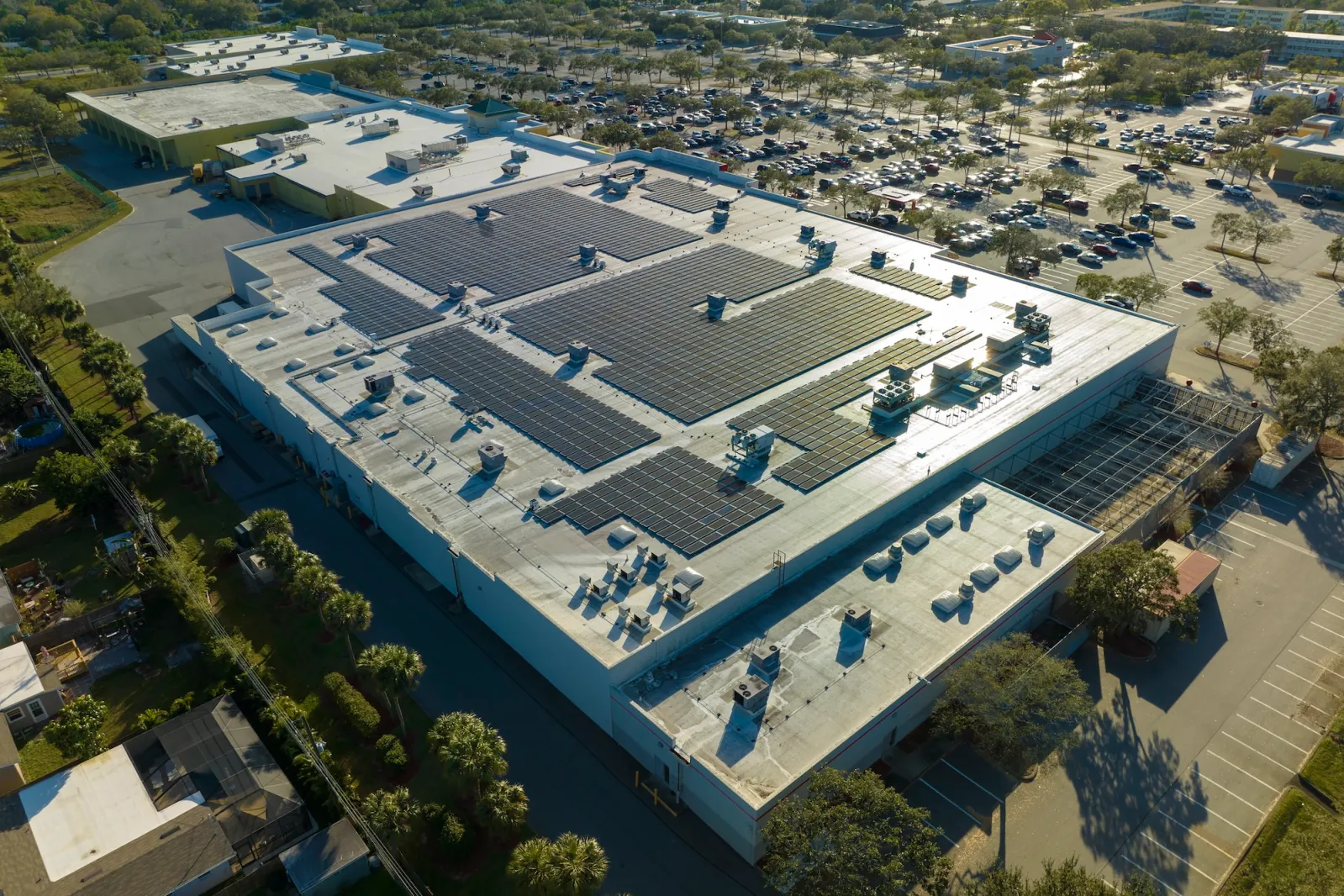
Baton Rouge DST acquisitions concentrate in NNN retail, petrochemical-support industrial and warehousing, government-leased office, and medical office. The petrochemical industry's stable employment base supports consumer retail demand along the major corridors, making fast-casual restaurant pads and auto-service NNN properties particularly common DST targets here. Industrial assets supporting the port and the refinery complex on the Mississippi River tend to be large flat-roof structures that require significant roofing expertise. Medical office near the Essen Lane healthcare corridor and the LSU Health Sciences Center attracts stable healthcare tenants but demands a contractor familiar with clinical facility roofing requirements.
Baton Rouge's climate risk for out-of-market DST operators is concentrated in two areas: hurricane exposure and year-round humidity. The humidity that characterizes South Louisiana — Baton Rouge averages 75 to 80 percent relative humidity year-round — creates rooftop conditions where moisture intrusion at any seam or penetration migrates into insulation layers quickly, and where standing water on flat roofs becomes a biological hazard as well as a structural concern. Sponsors from the arid West or northern states who have never experienced Gulf Coast humidity often fail to appreciate how aggressively it degrades roofing systems and how much more frequently inspections and drainage maintenance are required compared to their home markets.
A roof failure during a Baton Rouge DST hold period is particularly consequential because it often coincides with the storm events that are most disruptive to tenant operations and most difficult for the operator to manage remotely. An active roof leak following a tropical storm event is happening simultaneously with hundreds of other commercial roofing emergencies across the region — the operator who does not have a pre-existing contractor relationship will be waiting in a queue for service while tenant complaints accumulate. Investors receiving a distribution reduction explanation that traces back to an unplanned emergency repair — one that a proactive maintenance relationship would have prevented — have every right to ask hard questions about the operator's asset management standards in the Gulf Coast environment.
- What should a Baton Rouge DST offering memorandum's roof section specifically address?
- It should cover the drainage system's capacity for tropical rainfall events, wind-uplift rated fastening system condition, HVAC curb seal integrity, remaining useful life adjusted for Gulf Coast humidity and heat, and a replacement cost estimate that reflects the potential for post-hurricane labor market surges.
- How does hurricane season affect roofing reserve modeling for Baton Rouge DST properties?
- A single major storm event can drive regional roofing labor costs significantly higher as supply is absorbed by emergency repair demand — reserves modeled on normal-market pricing without a contingency buffer are presenting investors with an incomplete picture of capital risk.
- How quickly can you complete a commercial roof inspection for a Baton Rouge DST closing?
- We can typically schedule a site visit within 48 hours and deliver a written assessment within five to seven business days, which supports most DST due diligence timelines.
- How should DST operators prepare Baton Rouge commercial roofs for hurricane season?
- Pre-season preparation should include a late-May inspection covering drain clearing, HVAC curb seal inspection, flashing integrity check, and identification of any deferred maintenance — along with emergency response protocols documented with the contractor before June 1.
- Can you provide ongoing maintenance and storm response for a Baton Rouge property under out-of-state DST ownership?
- Yes — our service agreements include scheduled biannual inspections, pre-hurricane season preparation visits, priority post-storm response, documented maintenance logs, and direct communication with the operator's asset management team.