
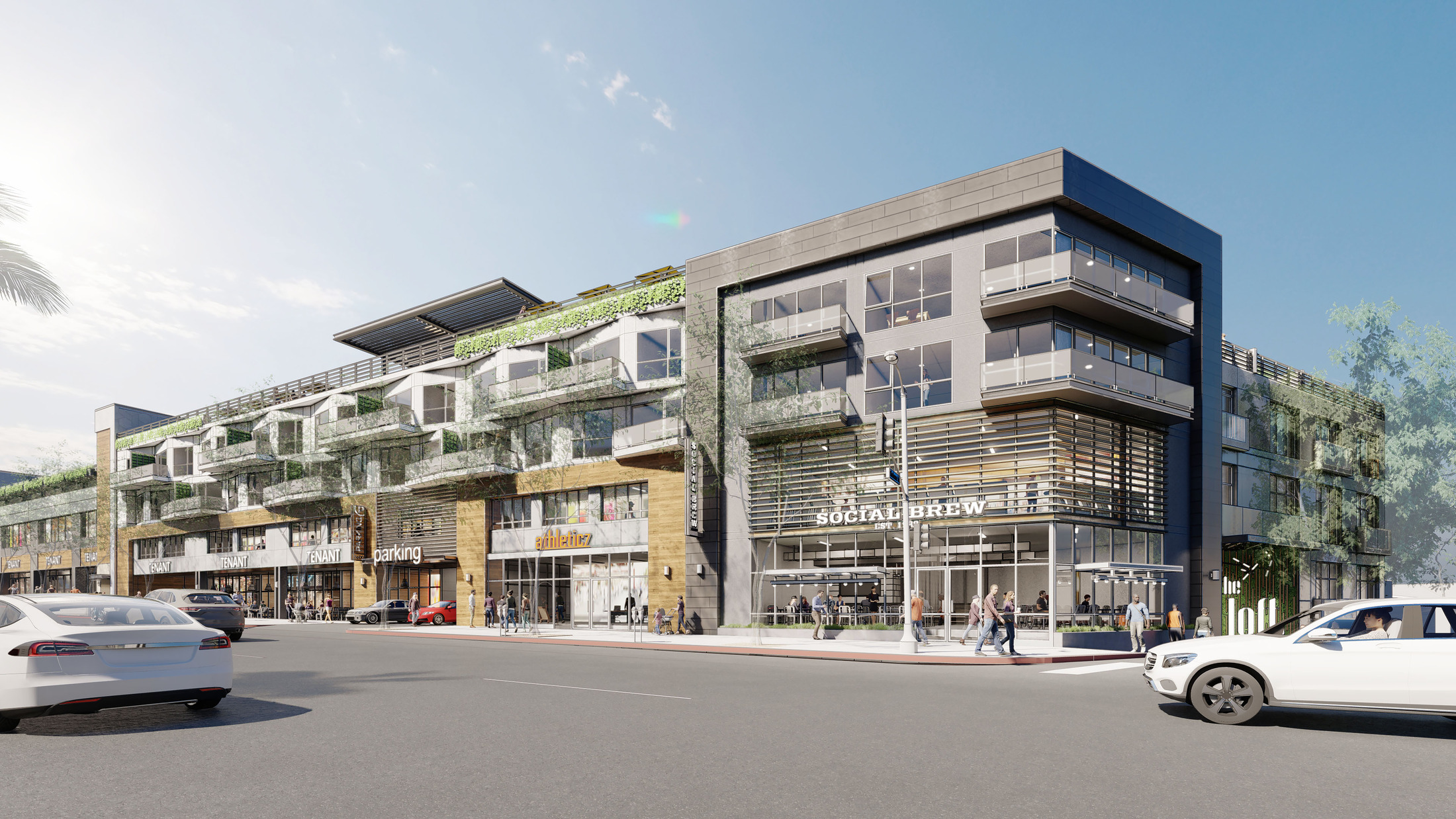
Baton Rouge's mixed-use development activity has concentrated along the Government Street corridor, the Mid City neighborhood, and the River District waterfront redevelopment zone, where projects combining ground-floor retail with upper-floor apartments or office space have drawn investment from both local developers and out-of-market capital attracted by Louisiana's historic and new market tax credit programs. The roofing demands of these buildings are shaped decisively by the Gulf Coast climate — Baton Rouge receives approximately sixty inches of annual rainfall, experiences tropical storm and hurricane impacts that can deliver sustained winds above 100 mph and rainfall rates exceeding six inches per hour, and endures a subtropical summer that keeps rooftop temperatures and humidity at levels that accelerate membrane degradation throughout a season lasting from May through October. A mixed-use roofing contractor in Baton Rouge who is not specifically experienced with Gulf Coast weather exposure is bringing the wrong tool to the job.
Hurricane and tropical storm wind loads are the governing structural consideration for roofing on Baton Rouge mixed-use buildings. ASCE Baton Rouge in a zone requiring design wind speeds that reflect the city's historical experience with Gulf Coast storm systems, and the uplift calculations for mixed-use buildings with large flat roof areas and parapet walls must account for both the building height and the open terrain exposure typical of urban redevelopment sites along the river. The edge and corner zones of mixed-use buildings — where a residential tower meets a lower retail pavilion — are the highest uplift pressure zones, and the fastener patterns, adhesive bonding schedules, and metal edge securement specified for these zones must be verified against the engineering calculations for the specific building geometry before installation begins. After Hurricanes Katrina, Rita, and Ida, insurance carriers serving the Baton Rouge market have become explicit about wind uplift documentation as a condition of property coverage.
The retail-to-residential transition in Baton Rouge mixed-use buildings must address the extreme vapor drive characteristic of Louisiana's subtropical climate. Interior air conditioning in both the commercial and residential portions creates a strong inward vapor pressure drive during the humid summer months, while the high ambient outdoor humidity means that vapor can drive in either direction depending on interior conditioning levels. Without a properly specified and continuously installed vapor retarder at the occupancy transition plane, moisture will accumulate within the assembly over successive summers and compromise both the thermal performance and the structural integrity of the insulation layer. This failure mode is slow and invisible, typically appearing only after the insulation has reached a point of saturation that begins to affect the occupied spaces below — at which point the repair scope is substantially larger than early intervention would have required.
Adaptive reuse projects in Baton Rouge — conversion of the historic Reymond building downtown, the transformation of former commercial properties along Third Street, and the reuse of mid-century institutional buildings near the LSU campus — present roofing challenges compounded by Louisiana's specific building history. The subtropical climate has accelerated deterioration of roofing assemblies on these buildings beyond what would be expected in a drier climate, and the legacy materials found on pre-1980 construction in Baton Rouge frequently include modified bitumen systems in early experimental configurations, built-up systems with multiple incompatible repair layers, and in some cases coal tar pitch over original structural concrete that has carbonated significantly. Pre-construction material characterization, including laboratory analysis of core samples, is essential for specifying a compatible new assembly and for identifying any hazardous materials requiring abatement coordination.
The Louisiana Historic Tax Credit program has funded a significant share of Baton Rouge's adaptive reuse mixed-use projects, and the Louisiana State Historic Preservation Office's review requirements add a coordination layer to roofing projects on historically designated properties. Visible roofing materials on buildings within historic districts may require review and approval by SHPO before installation, and the documentation requirements for maintaining the historic tax credit certification must be satisfied throughout the construction process. Roofing contractors working on LHRTC projects need to be familiar with the documentation requirements, since a missed inspection sign-off can jeopardize the credit certification and expose the building owner to significant financial liability.
Rooftop amenity decks on Baton Rouge mixed-use buildings require waterproofing and drainage design that prioritizes extreme rainfall capacity above all other performance criteria. A rooftop deck that drains adequately during a one-inch-per-hour summer thunderstorm will overflow catastrophically during the six-inch-per-hour rainfall rates that tropical systems deliver. The International Plumbing Code's secondary drainage requirements — overflow scuppers or drains sized for the maximum credible rainfall intensity — are not optional design elements in Baton Rouge; they are life-safety requirements that must be verified during the plan check process and field verified during construction. Rooftop planters and amenity structures must not obstruct primary or secondary drainage pathways, and the building manager's seasonal maintenance checklist should confirm that all drainage is clear before each tropical storm season begins.
Coordinating a reroofing project on an occupied Baton Rouge mixed-use building requires building the tropical storm season into the project schedule as a primary constraint, not an afterthought. The Gulf Coast storm season runs from June through November, with peak threat from August through October. A reroofing project that begins in July and plans for completion in October is scheduling its most vulnerable period — when the deck is open and the temporary membrane is in place — during peak storm season. Experienced Gulf Coast roofing contractors stage their occupied-building reroofing projects to minimize the open-deck window during peak season, use temporary membranes that are rated for wind uplift in tropical conditions, and have emergency response protocols for securing partially complete work when a tropical watch is issued for the Baton Rouge area.
Fire-rated assembly requirements for Baton Rouge mixed-use buildings follow Louisiana's State Uniform Construction Code, which adopts the IBC with Louisiana amendments. Louisiana's hot and humid climate adds a practical complication to fire-rated assembly installation: high ambient temperatures and humidity during the summer installation season affect the performance and cure time of firestop sealants and spray-applied fire resistive materials. Products specified for installation in Louisiana summer conditions must be verified against their manufacturer's temperature and humidity application requirements, and the inspection schedule must allow adequate cure time before the assembly is concealed by subsequent construction. The State Fire Marshal's Office jurisdiction over these installations means that non-compliant work can result in a stop-work order that delays the entire project until the deficiency is corrected.
Long-term maintenance agreements for Baton Rouge mixed-use buildings should include a mandatory pre-storm-season inspection protocol completed by June 1 each year, before the Gulf Coast storm season reaches peak intensity. This inspection should specifically verify the condition of all perimeter metal securement, through-wall scupper openings, and the anchorage of any rooftop HVAC equipment that could become a projectile in a hurricane-force wind event. The maintenance agreement should also include a post-storm damage assessment provision triggered by any storm producing sustained winds above fifty mph at the building's location, with a contractual response time commitment that allows emergency temporary repairs before the next rainfall event.
- How do Gulf Coast wind load requirements affect roofing specifications in Baton Rouge?
- ASCE 7 wind speed maps require mixed-use buildings in Baton Rouge to be designed for wind speeds that reflect the city's historical exposure to Gulf Coast tropical systems, with design wind pressures calculated for each roof zone based on building height, geometry, and terrain exposure. Edge and corner zones require fastening and adhesive specifications significantly more demanding than field zones, and metal edge securement must be engineered to match the calculated uplift forces rather than selected from a standard catalog. After Hurricane Ida demonstrated the consequences of inadequate edge securement on commercial buildings in the region, insurance carriers have begun requiring engineering documentation of edge detail compliance as a condition of coverage.
- What vapor management strategies work best in Baton Rouge's subtropical climate?
- In Baton Rouge's climate, vapor management in mixed-use roof assemblies typically requires a vapor retarder positioned below the insulation layer, on the warm side of the assembly during the cooling-dominated season. The retarder must be continuous and sealed at all penetrations, with special attention to the high-moisture areas above commercial kitchen exhausts on the ground floor. Closed-cell spray polyurethane foam as the insulation layer provides both thermal performance and vapor retardance in a single product, eliminating the positioning question that plagues assemblies with separate insulation and retarder layers, and it performs well in Louisiana's climate when applied at adequate thickness.
- What are the specific roofing documentation requirements for Louisiana Historic Tax Credit projects in Baton Rouge?
- The Louisiana State Historic Preservation Office requires that work on properties in historic tax credit projects conform to the Secretary of the Interior's Standards for Rehabilitation. Roofing replacements on contributing historic resources may require SHPO review and approval of material and color specifications before installation. The contractor must maintain photographic documentation of the pre-existing conditions and the installation process, and the SHPO project officer should be notified of inspection milestones in accordance with the project's historic credit agreement. Failure to follow the approved documentation protocol can result in credit recapture, and building owners should confirm that their roofing contractor has prior experience with LHRTC documentation requirements before award.
- How should mixed-use building managers in Baton Rouge prepare for tropical storm season each year?
- Preparation should include a formal pre-season roof inspection by June 1 covering perimeter metal securement, parapet flashing condition, drainage system capacity, and the anchorage of all rooftop equipment. Any identified deficiencies should be repaired before July 1, before peak storm season begins. The building manager should have a written emergency response protocol that specifies who authorizes emergency temporary repairs, which contractor is on retainer for emergency response, and how tenant notifications are communicated when a storm watch is issued for the area. After any significant storm, a professional inspection should be conducted before the building owner files an insurance claim.
- What is the recommended drainage design standard for rooftop amenity decks in Baton Rouge?
- Primary drainage for rooftop amenity decks in Baton Rouge should be sized for the one-hundred-year design storm intensity from the Louisiana Coastal Protection and Restoration Authority or the applicable parish drainage authority's IDF curves, which reflect the extreme rainfall rates associated with Gulf Coast tropical events. Secondary overflow drainage — scuppers or secondary drains — must also be sized for these extreme events and must be kept clear of any obstruction by permanent or temporary amenity features. The drainage system capacity should be verified by the project's mechanical or civil engineer of record during design, not estimated from a generic drain sizing table.