
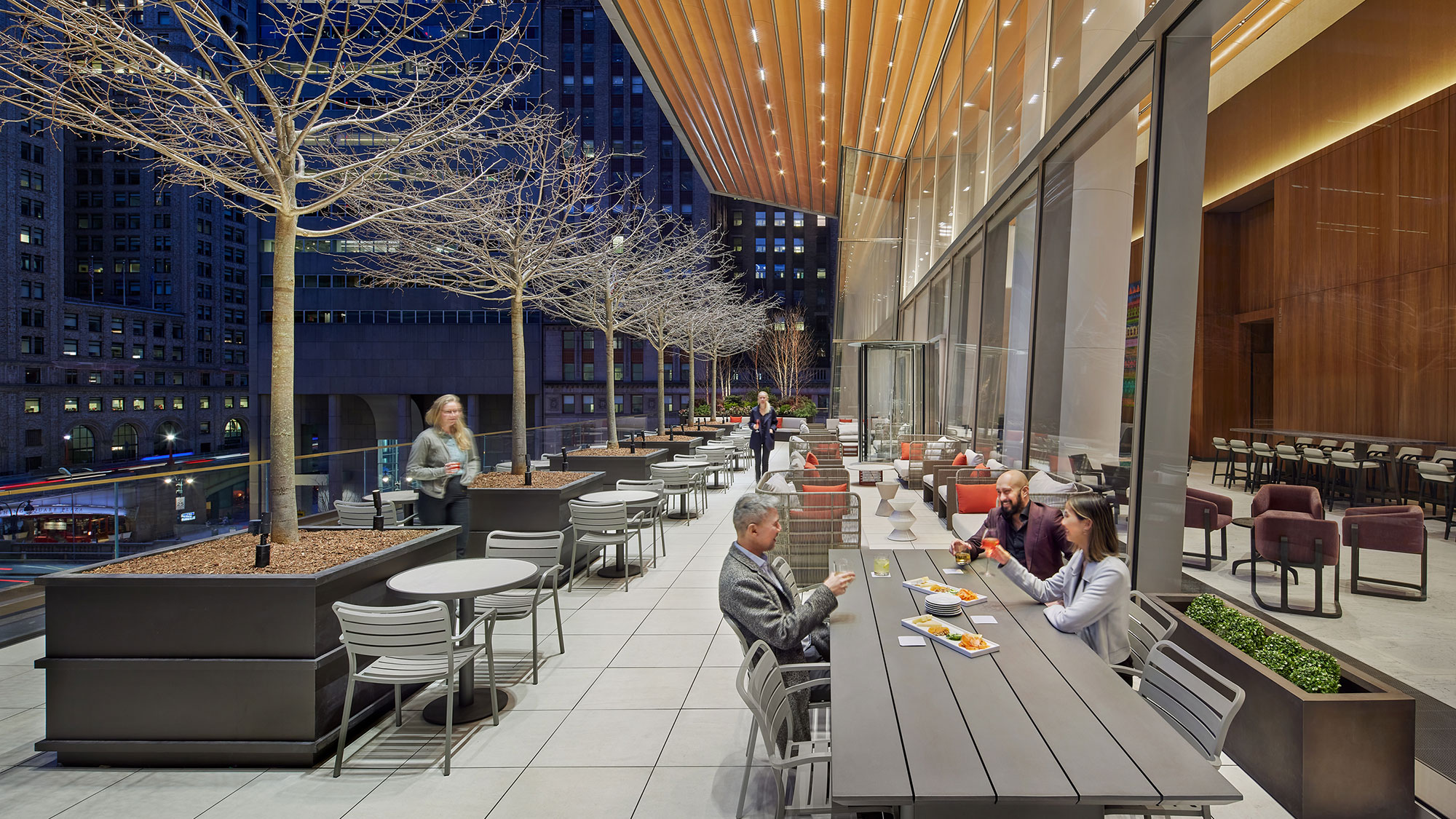
A mixed-use building is really several buildings stacked on top of each other, and the roofing reflects that. Storefronts at the sidewalk, apartments or offices above, structured parking woven into the base — each use sits under a different part of the envelope, with its own loads, its own occupancy schedule, and its own warranty paperwork. The mistake we see most often is treating the whole thing as one flat plane and pricing it like a warehouse. The work that protects a mixed-use development in Baton Rouge is the careful separation of the field roof from the occupied-deck and podium waterproofing that lives in the same structure.
Where mixed-use is going up around Baton Rouge
The format has taken hold here over the last decade. Downtown along Third Street and around the riverfront, infill and adaptive-reuse projects have put residences and offices over ground-floor retail in buildings that used to be single-use. Perkins Rowe on Perkins Road remains the anchor example of large-format mixed-use in the market, pairing apartments and offices with a retail and restaurant district. The Health District around Bluebonnet Boulevard and Essen Lane keeps drawing medical-office-over-retail development, and student-oriented mixed-use has clustered north of LSU around Nicholson Drive and the Nicholson Gateway area. Each of these brings podium decks, amenity terraces, and tenant mixes that a standard commercial flat roof was never designed to serve.
The podium is not a roof, and that distinction matters
The deck between parking or retail at grade and the residences or offices above is the single most misunderstood assembly on these projects. It is a waterproofing system, not a roofing system. It has to carry pedestrian traffic and sometimes vehicle loads, resist the constant hydrostatic pressure under planters and landscaped courtyards, take a root barrier where there is greenery, and accommodate the structural deflection of an occupied floor — all while sitting directly over leasable, occupied space where a leak is immediate and expensive. We specify traffic-bearing membranes, drainage composites, and the correct insulation load path in coordination with the structural engineer. A standard single-ply membrane dropped onto a plaza deck is the wrong product and typically fails within a few seasons. Getting the podium right is most of the job.
The upper roof areas bring their own list: parapet drainage on the residential levels, flash-through details at the mechanical penthouse, waterproofing under rooftop amenity decks, and clean transitions around elevator overruns and mechanical enclosures. On the residential top-out, the consequence of a missed detail is a leak into someone's unit, so we treat those details as the high-stakes items they are.
The integrated parking structure adds yet another waterproofing condition. Where the top level of a parking deck doubles as a courtyard, a leasing terrace, or simply the exposed roof of the garage, it has to take vehicle traffic, oil and fluid exposure, and the same expansion-joint movement a parking structure always sees — a traffic coating, not a roofing membrane, is the correct system there. The expansion joints and the deck-to-stair-tower transitions are where these decks chronically leak, and we detail them as their own items rather than running a field coating blindly across the movement.
Coordinating warranties across a layered building
A mixed-use project rarely runs on a single roofing warranty. The field membrane may carry an NDL manufacturer warranty, the podium deck a separate traffic-coating warranty, and the amenity deck assembly a third under the finish surface. Lenders and developers want all of it documented and registered correctly in the owner's name, with the boundaries between systems clearly drawn so there is no gray area if water shows up later. We map the warranty coverage of every distinct assembly at the start and register each one properly at closeout, so the building's asset file is clean and there is no finger-pointing between trades two years on.
Building around occupants and a downtown context
Most of this work happens while the building is occupied. Ground-floor retail is open during business hours, residents are home in the evenings, and downtown and Mid City sites carry noise-ordinance limits and tight street access that govern how and when we can stage and lift. We build a phasing and containment plan before mobilization — noise, vibration, and dust controls, daily dry-in confirmed in writing, and coordinated elevator and common-area access with building management so residents and tenants are disrupted as little as possible.
Mixed-Use Development Roofing Questions
What is the difference between roofing and waterproofing on a podium deck?
A roofing membrane is built for low-slope drainage and occasional maintenance traffic. A podium waterproofing assembly has to take structural deflection, root intrusion, constant hydrostatic pressure under planters, and pedestrian or vehicle loads. Using a standard roofing membrane on a plaza or amenity deck is the wrong specification and usually fails within a few years.
How do you coordinate work over occupied retail and residences?
We build a phasing plan that sequences work to minimize impact, with noise, vibration, and dust containment set before mobilization. Daily dry-in is confirmed in writing, and elevator and common-area access is coordinated with building management so residents and tenants are disrupted as little as possible.
Do you handle rooftop amenity decks?
Yes. Amenity decks need a traffic-bearing waterproofing assembly under the finish surface, not a standard roofing membrane. We specify, install, and warranty those assemblies in coordination with the deck finish contractor and the structural engineer of record.
How do you keep the multiple warranties straight?
We map every distinct assembly — field roof, podium deck, amenity deck — and the warranty that covers each, draw clear boundaries between them, and register each one in the owner's name at closeout so there is no gray area if water appears later.
Can you work on an occupied mixed-use building during a renovation?
Yes. We do occupied mixed-use work regularly. It runs on disciplined daily dry-in, phased sequencing, and coordinated notice to building management and affected tenants. We do not demobilize for the day until the work area is watertight.